Search This Blog

Saturday, December 15, 2012

Carving the Moon: A New Woodcut Print by Tugboat Printshop

Carving the Moon: A New Woodcut Print by Tugboat Printshop:
Carving the Moon: A New Woodcut Print by Tugboat Printshop wood prints wood posters and prints moon illustration
Since 2006 Pittsburgh-based husband and wife Paul Roden and Valerie Lueth have run the Tugboat Printshop, a traditional printmaking studio where everything is made by hand, starting with the giant slabs of wood into which each of their images are carved. The Moon is their largest hand-carved relief print ever coming in at 36″ x 32″ (91 x 82 cm) and will printed using two colors. If you’re interested they documented the process of carving the beautiful illustration which is now available for pre-order, and I also recommend checking out their other prints. (via cloud junky)

"For the last seven years, at the Metropolitan Police forensic lab in south London, audio specialists..."

[tl;dr - Audio recordings can be timestamped against fluctuation in electrical hum. O_O -egg]
"For the last seven years, at the Metropolitan Police forensic lab in south London, audio specialists...": “
For the last seven years, at the Metropolitan Police forensic lab in south London, audio specialists have been continuously recording the sound of mains electricity.

It is an all pervasive hum that we normally cannot hear. But boost it a little, and a metallic and not very pleasant buzz fills the air.

“The power is sent out over the national grid to factories, shops and of course our homes. Normally this frequency, known as the mains frequency, is about 50Hz,” explains Dr Alan Cooper, a senior digital forensic practitioner at the Met Police.

Any digital recording made anywhere near an electrical power source, be it plug socket, light or pylon, will pick up this noise and it will be embedded throughout the audio.

This buzz is an annoyance for sound engineers trying to make the highest quality recordings. But for forensic experts, it has turned out to be an invaluable tool in the fight against crime.


- BBC News - The hum that helps to fight crime

Monday, December 10, 2012

Burrito Bomber: open source hardware-based drone autonomously delivers Mexican food

Burrito Bomber: open source hardware-based drone autonomously delivers Mexican food:

The good folks at Darwin Aerospace have figured out how to use drones to parachute burritos directly onto your property. They await pending FAA reforms before they can go into business, however. Here's how it works:


It works like this:
  1. You connect to the Burrito Bomber web-app and order a burrito. Your smartphone sends your current location to our server, which generates a waypoint file compatible with the drone's autopilot.
  2. We upload the waypoint file to the drone and load your burrito in to our custom made Burrito Delivery Tube.
  3. The drone flies to your location and releases the Burrito Delivery Tube. The burrito parachutes down to you, the drone flies itself home, and you enjoy your carne asada.
We built Burrito Bomber using a handful of open source projects and some new bits we created ourselves. All the code and 3D models we created for Burrito Bomber are on our GitHub page so you can build one too!

Burrito Bomber - Darwin Aerospace

(via JWZ)


Clean rivers: A 20th/21st century miracle

Clean rivers: A 20th/21st century miracle:


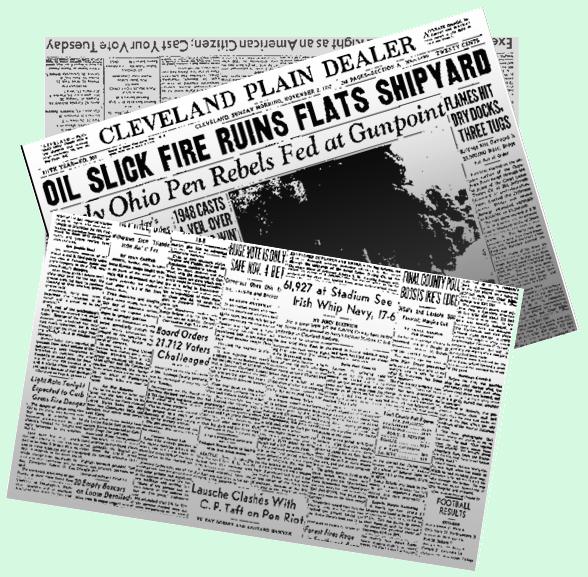
I was born in 1981 and, because of that, I largely missed the part of American history where our rivers were so polluted that they did things like, you know, catch fire. But it happened. And, all things considered, it didn't happen that long ago. The newspaper clippings above are from a 1952 fire on Ohio's Cuyahoga river. Between 1868 and 1969 that river burned at least 13 times.

That's something worth remembering — not just that we once let our waterways get that trashed, but also the fact that we've gone a long way towards fixing it. We took 200 years of accumulating sewage and industrial degradation and cleaned it up in the span of a single generation. At Slate, James Salzman writes about that reversal of environmental fortune, a shift so pronounced — and so dependent upon a functioning government in which a diverse spectrum of politicians recognize the importance of investing in our country's future — that it seems damned-near impossible today.
... discharging raw sewage and pollution into our harbors and rivers has been common practice for most of the nation’s history, with devastating results. By the late 1960s, Lake Erie had become so polluted that Time magazine described it as dead. Bacteria levels in the Hudson River were 170 times above the safe limit. I can attest to the state of the Charles River in Boston. While sailing in the 1970s, I capsized and had to be treated by a dermatologist for rashes caused by contact with the germ-laden waters.

In 1972, a landmark law reversed the course of this filthy tide. Today, four decades later, the Clean Water Act stands as one of the great success stories of environmental law. Supported by Republicans and Democrats alike, the act took a completely new approach to environmental protection. The law flatly stated there would be no discharge of pollutants from a point source (a pipe or ditch) into navigable waters without a permit. No more open sewers dumping crud into the local stream or bay. Permits would be issued by environmental officials and require the installation of the best available pollution-control technologies.

The waste flushed down drains and toilets needed a different approach, so the Clean Water Act provided for billions of dollars in grants to construct and upgrade publicly owned sewage-treatment works around the nation. To protect the lands that filter and purify water as it flows by, permits were also required for draining and filling wetlands.

Read the rest of the story

Image from the Blog on Smog, which also has a really nice timeline of cleanup on the Cuyahoga.


Via Laura Helmuth


John Hodgman on the coming apocalpyse

John Hodgman on the coming apocalpyse:

Our friend John Hodgman delivers an important message about the imminent apocalypse. For more of Mr. Hodgman's wisdom, I'd suggest his latest book, That Is All.


Historic explosions recreated in cauliflower

Historic explosions recreated in cauliflower: NewImage
We've previously posted about artist Brock Davis's "Broccoli Treehouse" and "Gummi Bearskin Rug." Now he's recreated "Historic Explosions in Cauliflower." Above, "Cauliflower Space Shuttle Challenger, 1986."


Friday, December 7, 2012

Yann Frisch will boggle your mind

[Some of the most incredible sleight-of-hand I've ever, ever seen. -egg]

Yann Frisch will boggle your mind:

Yann Frisch is an amazing, young French magician. He's been winning awards and entertaining folks the world over.


Thursday, December 6, 2012

Headless photographs of the 19th century

Headless photographs of the 19th century: Headlessss
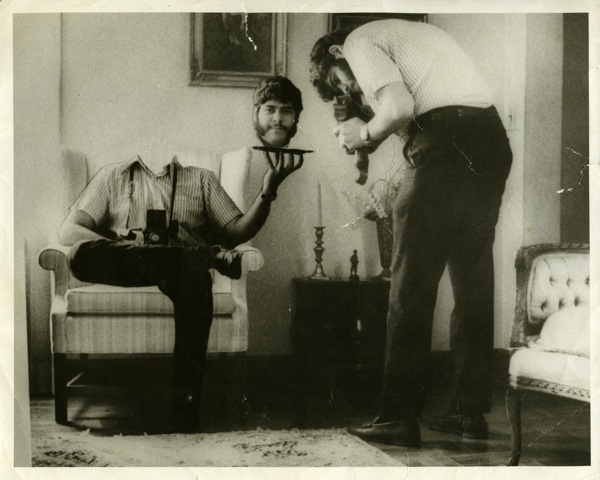
NewImageI was delighted by this collection of 19th century "headless photographs." These Victorian illusory photographs likely inspired the "Head Photographer" self-portrait made by my late brother Mark in 1973. (Thanks, Randall!)


Tinkercad

Tinkercad:


If you want to introduce a kid (or yourself!) to CAD (computer aided design), Tinkercad is by far the easiest and most fun way to begin. Today I mentioned to my 10-year-old that our CNC machine would soon be up and running. He asked what a CNC could do, and I said one example would be to carve a battlefield out of stiff foam for Warhammer figures.
That got his attention ;-) . He wanted to know how to tell the CNC what to do. I explained a bit about CAD, and showed him Tinkercad, giving the example of one cube that you could stretch and change.
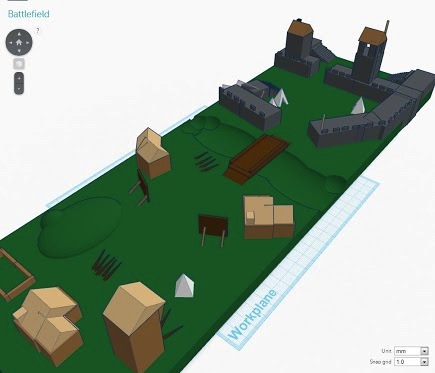
Then I got busy with something else and left him to figure out Tinkercad himself. I came back an hour later and the below is what he’d designed. A ten-year-old. No training. One hour.


The green stuff we’re going to CNC out of a sheet of stiff foam. The rest we’ll probably 3D print on the Makerbot. It will take a weekend, but this could be our first 100% digital craft project.
This is an example of what I talk about in Makers: manufacturing technologies are getting so easy and cheap (even free) that anyone can use them. Kids today can grow up as fluent in CAD as they are in everything else on computers. Democratizing the tools of publishing brought us the Web. Just imagine what democratizing the tools of manufacturing will do.
We’ve used the previously reviewed Sketchup and Autodesk 123D, and both are great. But Tinkercad just runs in your Web browser and its simple interface disguises a very sophisticated cloud-based CAD engine.
-- Chris Anderson
Tinkercad

Free trial, or $19/month for personal account (pro accounts vary)

https://tinkercad.com/

Tuesday, December 4, 2012

Computer classes should teach regular expressions to kids


Sent to you via Google Reader

Computer classes should teach regular expressions to kids


My latest Guardian column is "Here's what ICT should really teach kids: how to do regular expressions," and it makes the case for including regular expressions in foundational IT and computer science courses. Regexp offer incredible power to normal people in their normal computing tasks, and we treat them as deep comp-sci, instead of something everyone should learn alongside typing.


I think that technical people underestimate how useful regexps are for "normal" people, whether a receptionist labouriously copy-pasting all the surnames from a word-processor document into a spreadsheet, a school administrator trying to import an old set of school records into a new system, or a mechanic hunting through a parts list for specific numbers.


The reason technical people forget this is that once you know regexps, they become second nature. Any search that involves more than a few criteria is almost certainly easier to put into a regexp, even if your recollection of the specifics is fuzzy enough that you need to quickly look up some syntax online.


Here's what ICT should really teach kids: how to do regular expressions


“On school-day mornings, I walk my grade-school-age son...


Sent to you via Google Reader

"On school-day mornings, I walk my grade-school-age son...


"On school-day mornings, I walk my grade-school-age son 400 meters down the hill to the bus stop. Last winter, I fantasized about sitting at my computer while a camera-equipped drone followed him overhead.
 So this year, I set out to build one. For the basic airframe, I selected a quadcopter design for its maneuverability and ability to hover. Construction was straightforward: You can buy a quadcopter kit with all the pieces or, as I did, get parts separately and spend more time on system integration."


The DIY Kid-tracking Drone - IEEE Spectrum, via @justinpickard

Monday, December 3, 2012

Secret Password (5 Comments)

Secret Password (5 Comments):
''And look at the weird numbers I carved into the wall to prove you're not a robot.''

First comic of December! Such a significant milestone, we should throw a gigantic party! Eh, nevermind, that sounds like a lot of work.

The future of fuel has gone to sh*%.


Sent to you via Google Reader

The future of fuel has gone to sh*%.


Everybody poops, including panda bears. (See about 0:35 in the above video for evidence.) But panda poop could turn out to be quite a bit more important than your average animal excrement. That's because scientists are "mining" it for bacteria that could help make better biofuel.


The key problem with biofuel today is that the stuff that's actually economical to produce — i.e., corn ethanol — isn't really that great for the environment. Corn farming uses a lot of fertilizer, water, and herbicide. Using corn that was previously grown for food to make fuel, instead, can lead to deforestation as people clear land to make up for the lost food farming. Some models of carbon dioxide emissions suggest that, by the time you factor in things like fossil-fuel derived fertilizers and the deforestation, a gallon of corn ethanol might not be any better for climate change than a gallon of gasoline. Not all the models agree on that. But even if corn ethanol produces fewer carbon emissions than gas, you still have to deal with the fact that growing nutrient-hungry corn on the same patch of ground over and over and over is really bad for local soil and water quality.


Cellulosic ethanol could be a much better alternative — particularly cellulosic ethanol made from native, perennial plants that don't require heavy inputs to thrive and actually improve the health of the land they're grown on. The problem: Converting those plants into fuel is, so far, a lot more expensive. Cellulose — the plant fiber that makes up things like stalks of bamboo and tall prairie grasses — is tough stuff and hard to break down.


That's where panda poop comes in. Pandas process tons of cellulose every day, right in their guts. Maybe the bacteria that work for them could work for us, too.


Read more about this research at Chemical and Engineering News


Sunday, December 2, 2012

Dog dressed as two dogs holding a present

Dog dressed as two dogs holding a present:
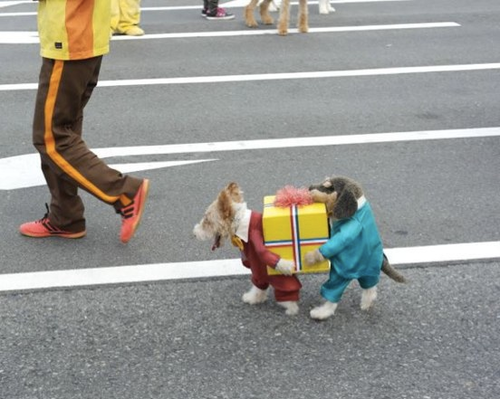
Dan Wrexham throws down the gauntlet: "If you've seen a better picture than this picture of a dog dressed as two dogs carrying a present, I don't believe you." I can't think of anything better.
Dog dressed as two dogs holding a present on Twitter via @willak via @Mike_FTW